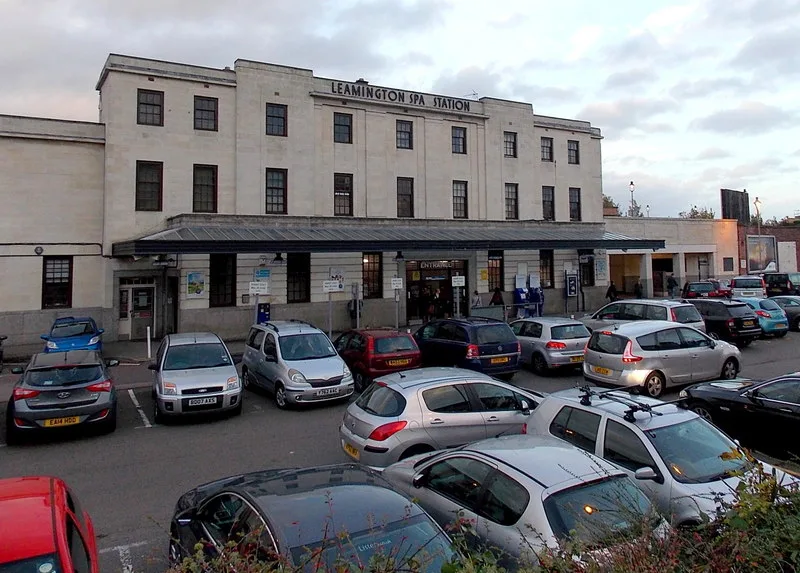

Warwick councillors approved replica oak doors at Leamington station on 11 August, after four originals were scrapped without consent. The conditions added.
Warwick District Council’s planning committee granted listed building consent on 11 August for four replica oak doors at Leamington Spa station, then rewrote the crucial condition so that nothing can be manufactured until the joinery has been drawn, specified and signed off against the station’s surviving original doors.
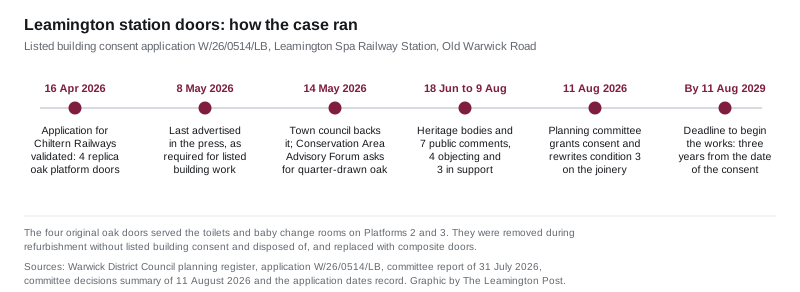
The doors being copied no longer exist. They served the toilets and baby change rooms on Platforms 2 and 3, and they were taken out during refurbishment work without the consent a Grade II listed building requires. The council’s committee report puts it plainly: “The current doors were installed without permission and are considered to be poor quality, composite doors. The current doors replaced historic original oak doors which were removed due to renovation works. The applicants were unaware that this replacement would require permission and disposed of the original doors.”
The application, reference W/26/0514/LB, was made for Chiltern Railways and validated on 16 April 2026. It went to committee rather than being settled by officers “due to the number of objections received”.
What goes back
The consent covers four oak doors built as replicas of the originals, including the ironmongery, and finished with a varnish matched to the doors that survive elsewhere in the station. Lining timbers that were packed around the frames to make the composite doors fit have to come out, and the paint applied to the original frames has to be stripped back.
Two smaller items were rolled into the same application: wall-mounted waste bins on Platform 2 by the toilets, and a timber-clad divider next to the baby changing room so that its outward-opening door does not swing into seated passengers.
The case officer’s overall judgement was that the works have a neutral effect on the listed building. On the doors themselves the report is blunter about what has already happened: “Whilst the loss of the original doors is disappointing and no proposal can undo this harm, these works are considered to be an appropriate response to address this.”
The condition the committee rewrote
As drafted, condition 3 asked only for samples of the oak and varnish to be approved in writing before installation. Members were not satisfied with that. According to the council’s summary of decisions from the meeting, the application was approved subject to a revised condition requiring, before manufacture or installation:
- detailed joinery drawings, “including relevant full-size or large-scale profiles”
- confirmation of the door construction, timber species and cut
- details of panels, stiles, rails, mouldings, ironmongery and fixings
- the complete finishing system, colour and sheen
All of it, the condition says, “derived from the surviving original station doors and approved in writing by the Local Planning Authority”. The committee also required the divider to be made of the same materials as the replacement doors, and added a note asking Chiltern Railways to make sure partially sighted passengers can tell the men’s and women’s toilets apart.
Two further conditions stand from the report. The works must begin within three years, and they must follow drawings 26-5021-001, 26-5021-002 and 26-5021-003 submitted on 16 April, plus the “Proposed Barrier” detail submitted on 17 June.
Warwick District Council notes that its published decisions summary “is not the formal minutes of the Planning Committee” and is meant to give early notice. As of 14 August the register showed no decision notice issued, so the formal wording of the conditions follows in the coming weeks. Agendas, addenda and minutes are published through the council’s Planning Committee page, and meetings are livestreamed.
Who said what
Royal Leamington Spa Town Council supported the application because it reinstates original features. The Conservation Area Advisory Forum said it was disappointed at the loss of the historic doors but welcomed the attempt to put it right, and asked for quarter-drawn oak and an appropriate Great Western Railway varnish. It also thought the bins and the barrier were visually intrusive and could be better placed or made of better materials.
Leamington History Group objected, describing the station as one of Warwickshire’s finest Art Deco railway buildings and arguing that the replica specification was not good enough, with restoration of the original doors required instead. The Railway Heritage Trust supported the scheme with caveats: replacing inferior doors with better ones is beneficial, but the originals should not have been lost. The Twentieth Century Society registered a neutral comment. The Leamington Society also lodged an objection, in June, and wrote again to the council in August.
Seven comments came from the public, four objecting and three in support. The objections turned on the loss of the doors and on doubt that the replacements would match; several argued the new doors should be exactly as the originals rather than oak-style, and that the bins and the divider spoil the platform. Those in support said the originals should never have been removed but backed the effort to restore the look.
The officer’s answer to the doubts about quality was the sample condition, which the committee then made considerably harder to satisfy.
What it means for you
If you use the station, nothing changes yet and nothing is closed. The consent lasts three years, the joinery details have to be approved before anything is made, and the work is confined to four doorways and a small amount of platform furniture. Expect the composite doors to stay in place for months rather than weeks.
If you care about the building, the practical point is that this was retrospective. The station is listed at Grade II on the National Heritage List for England, entry 1390496, and it sits inside the Leamington Urban Conservation Area, so consent was needed before the original doors came out, not after. The report describes the 1939 Great Western Railway rebuild as a steel-framed structure sheathed in brick and faced with Portland stone above a granite plinth. Any comparable work on a listed building, commercial or domestic, needs listed building consent first, and “we did not know” is not a defence in law.
If you are planning work on a listed home or shop in the district, the case is a useful marker of where the bar now sits: a committee that had a sample condition in front of it chose to demand full-size profiles, timber species and cut, and a complete finishing schedule taken from surviving original fabric. Check what is registered near you on our Leamington planning news page, and if you are heading to the station itself, our Leamington train times and travel page has the fares, journey times and car parking.
Sources
- Warwick District Council planning register, application W/26/0514/LB, Leamington Spa Railway Station, Old Warwick Road, CV31 3NS.
- Committee report, published 31 July 2026.
- Committee decisions summary, Planning Committee, 11 August 2026.
- Historic England, National Heritage List for England, list entry 1390496.
Have your say